
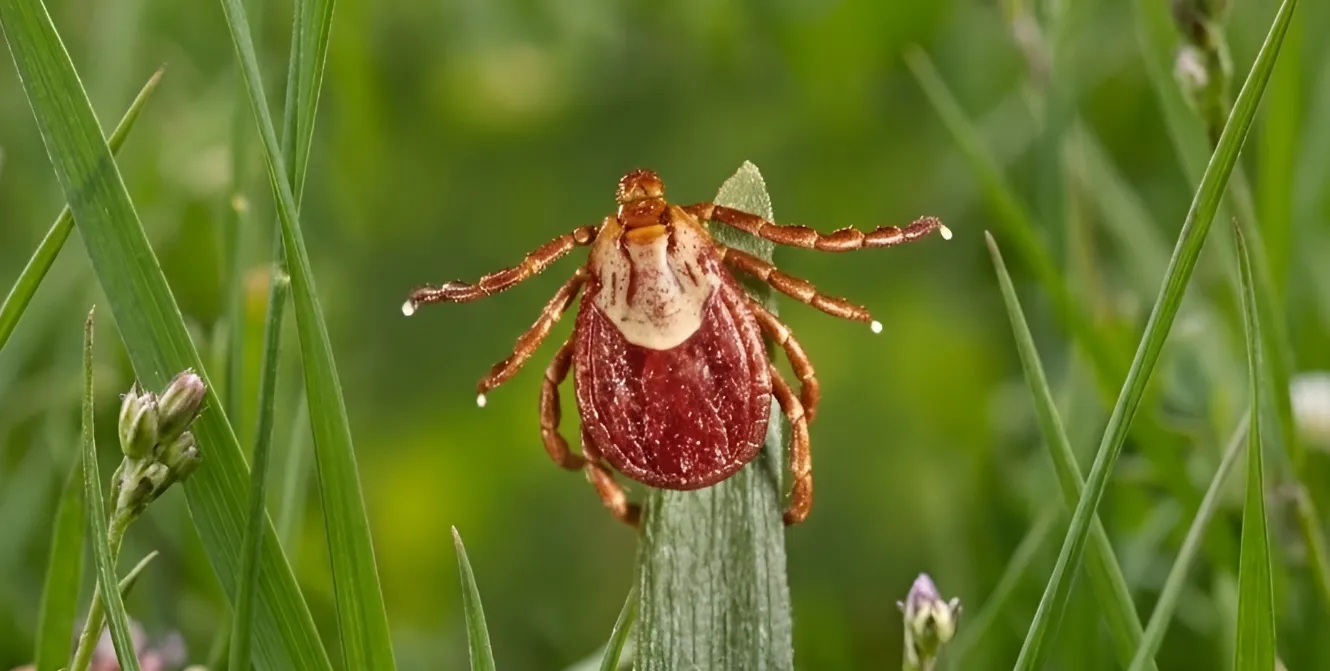
Ticks in North Texas
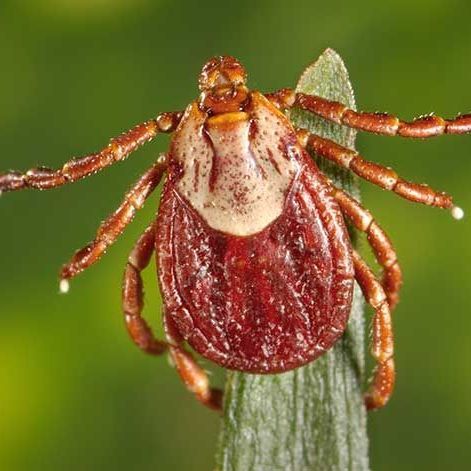
Characteristics:
- Darker red color paired with off-white markings on the abdomen
- Adults measure approximately 1/4 inch
- Larvae possess 6 legs; adults have 8 legs
Habitat & Behavior:
- Prefer areas with minimal shade, grasslands, and trails
- Target hosts ranging from small rodents to deer
Health Risks:
- Capable of transmitting Rocky Mountain Spotted Fever
- May cause canine tick paralysis if attachment location permits
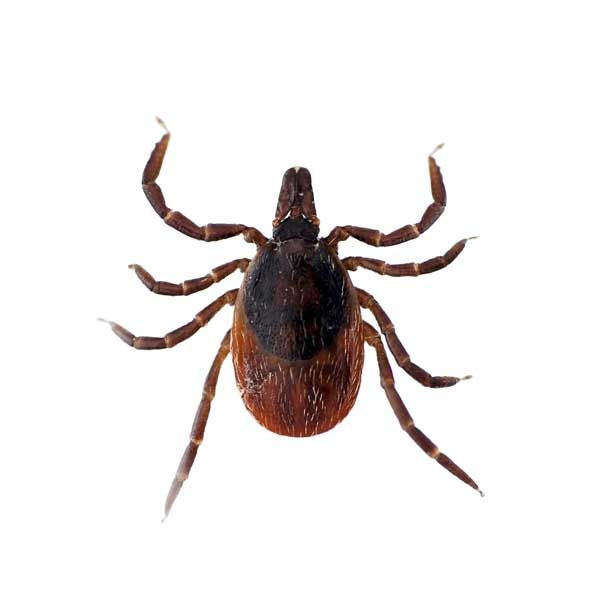
Characteristics:
- Darker brown/black body paired with darker colored legs
- Adults average 1/8 inch in length
- Females display reddish-orange coloring around the scutum
Habitat & Behavior:
- Most commonly found on branches, shrubs, and wooded areas
- Commonly like to place themselves in areas not often interacted with, such as behind the ear
- Active October through May when temperatures remain above freezing
Health Risks:
- Primary carrier of Lyme Disease
- Recently increased incidents involving human infection
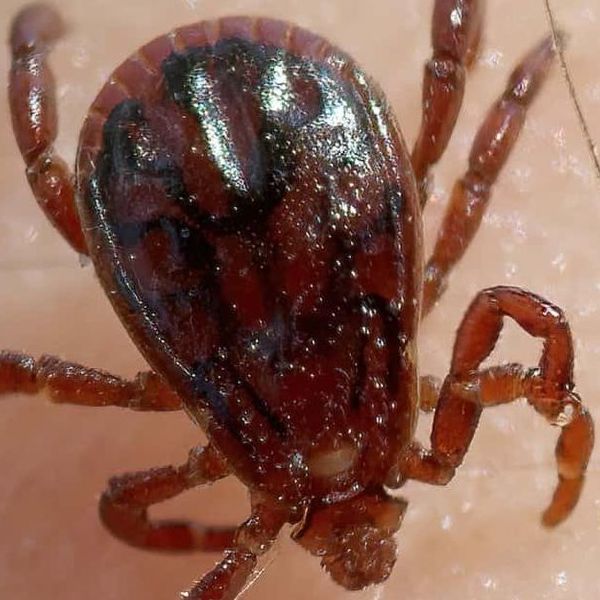
Characteristics:
- Distinctly darker coloration than other regional tick varieties
- Minimal sexual dimorphism in appearance
Habitat & Behavior:
- Most common tick to be found within a dwelling
- Located in grassy areas, shrubs, and near dog houses
- Prefers warmer climates
Health Risks:
- Transmits Rocky Mountain Fever and canine monocytic ehrlichiosis
- Can carry pathogens causing human ehrlichiosis
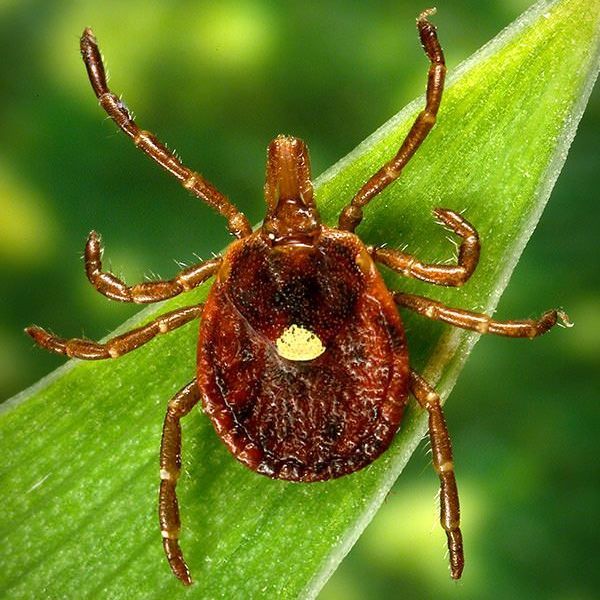
Characteristics:
- Females identifiable by single white dot in the center of the abdomen
- Coloration ranges from reddish-brown to grayish-brown
- Reach approximately 1/4 inch in length
Habitat & Behavior:
- More active and seeking of a host than most other ticks
- Located in outdoor fields and wooded areas
Health Risks:
- Causes localized rashes and triggers red meat allergies
- Transmits monocytic ehrlichiosis, Rocky Mountain Spotted Fever, and ‘Stari’ borreliosis