
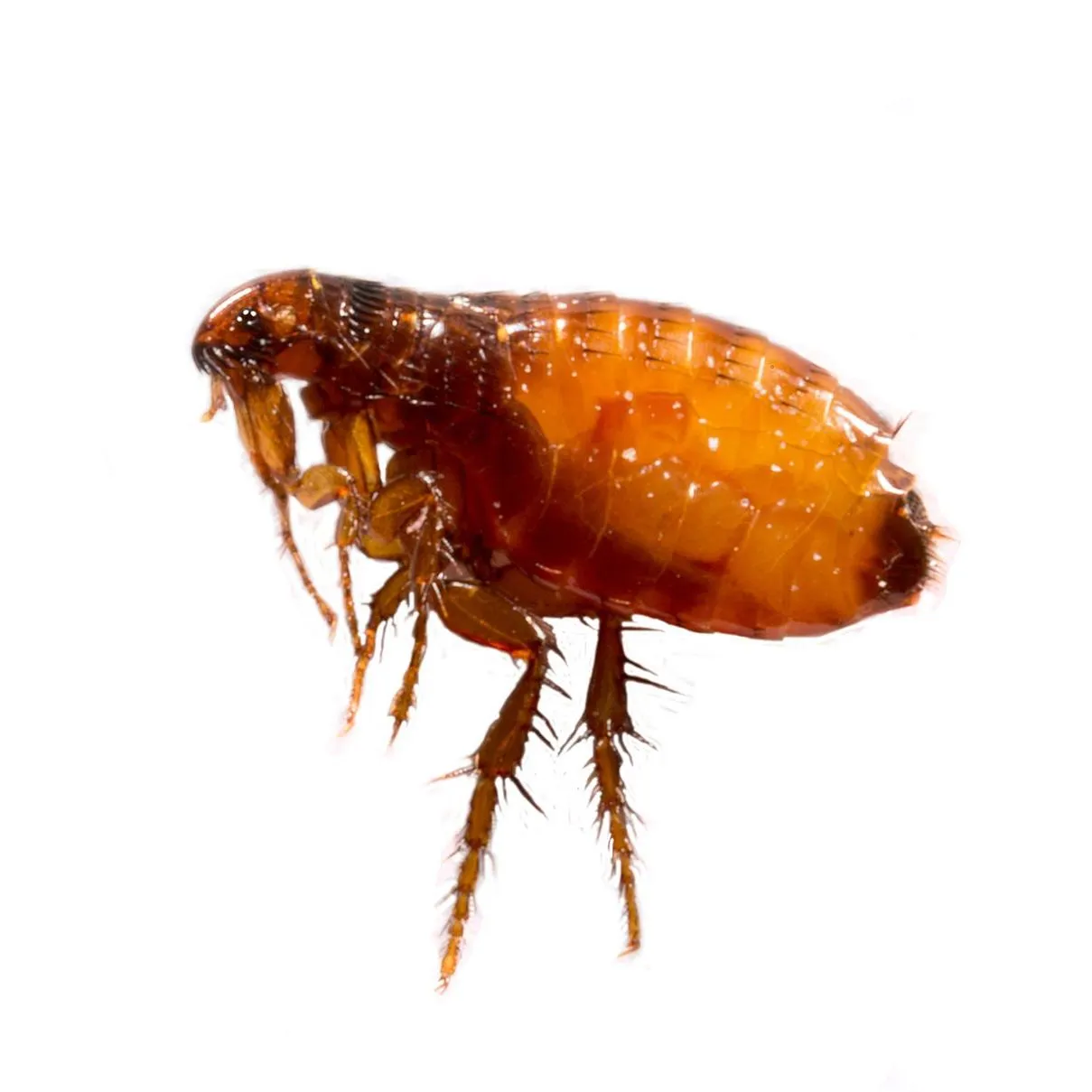
Feline Flea (Cat Flea)
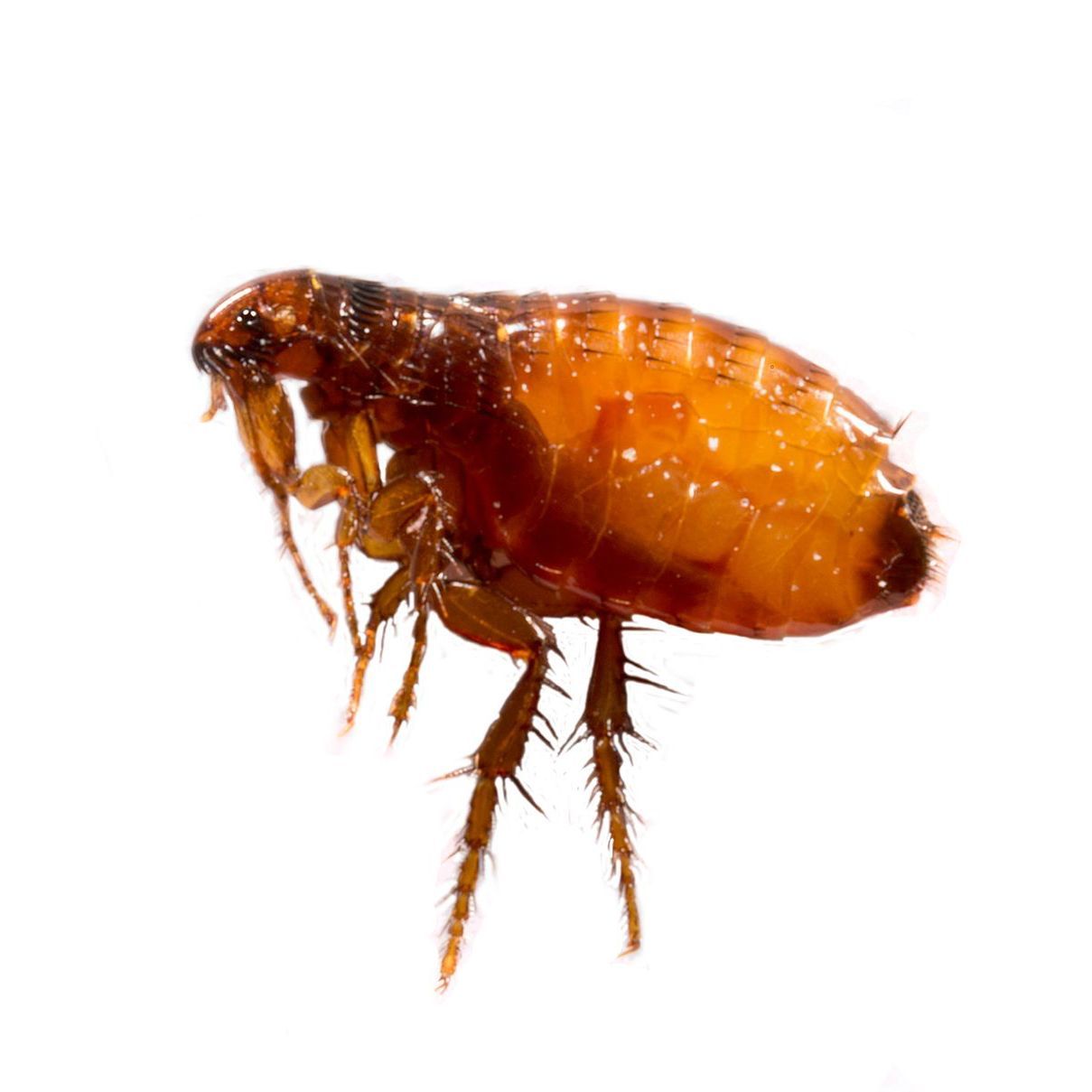
Physical Characteristics:
- Adult cat fleas range from 1 to 2.5 millimeters in length
- They are flattened laterally, enabling movement through host fur
- Typically brownish-black in coloration
Life Cycle:
- Four developmental stages: egg, larva, pupa, and adult
- Females deposit eggs on hosts or surrounding environments like bedding
- Flea larvae hatch from the eggs and feed on organic debris
- Larvae pupate within cocoons before emerging as adults
- Complete cycle achievable in several weeks depending on conditions
Feeding Behavior:
- Adults consume blood from hosts
- Specialized mouth structures pierce skin for feeding
- Bites produce itching, redness, and skin irritation in both animals and humans
Hosts:
- Despite the name, these parasites infest cats, dogs, rodents, wildlife, and humans
- Human contact results in skin irritation
Transmission of Diseases:
- Vectors for Bartonella bacteria causing cat scratch fever
- They can also transmit tapeworms if ingested by the host during grooming
Signs of Infestation:
- Excessive scratching, biting, and grooming behaviors
- Flea dirt (tiny, dark specks resembling ground pepper) visible in fur or bedding