
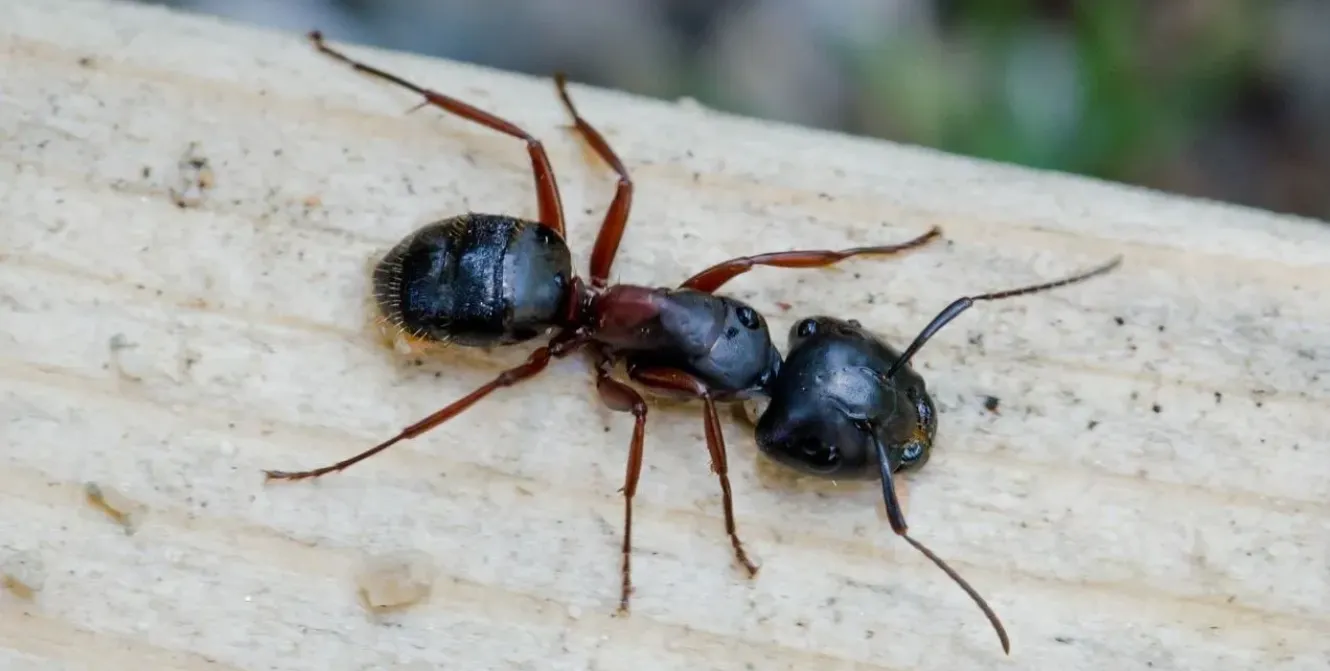
Type of Ants in North Texas
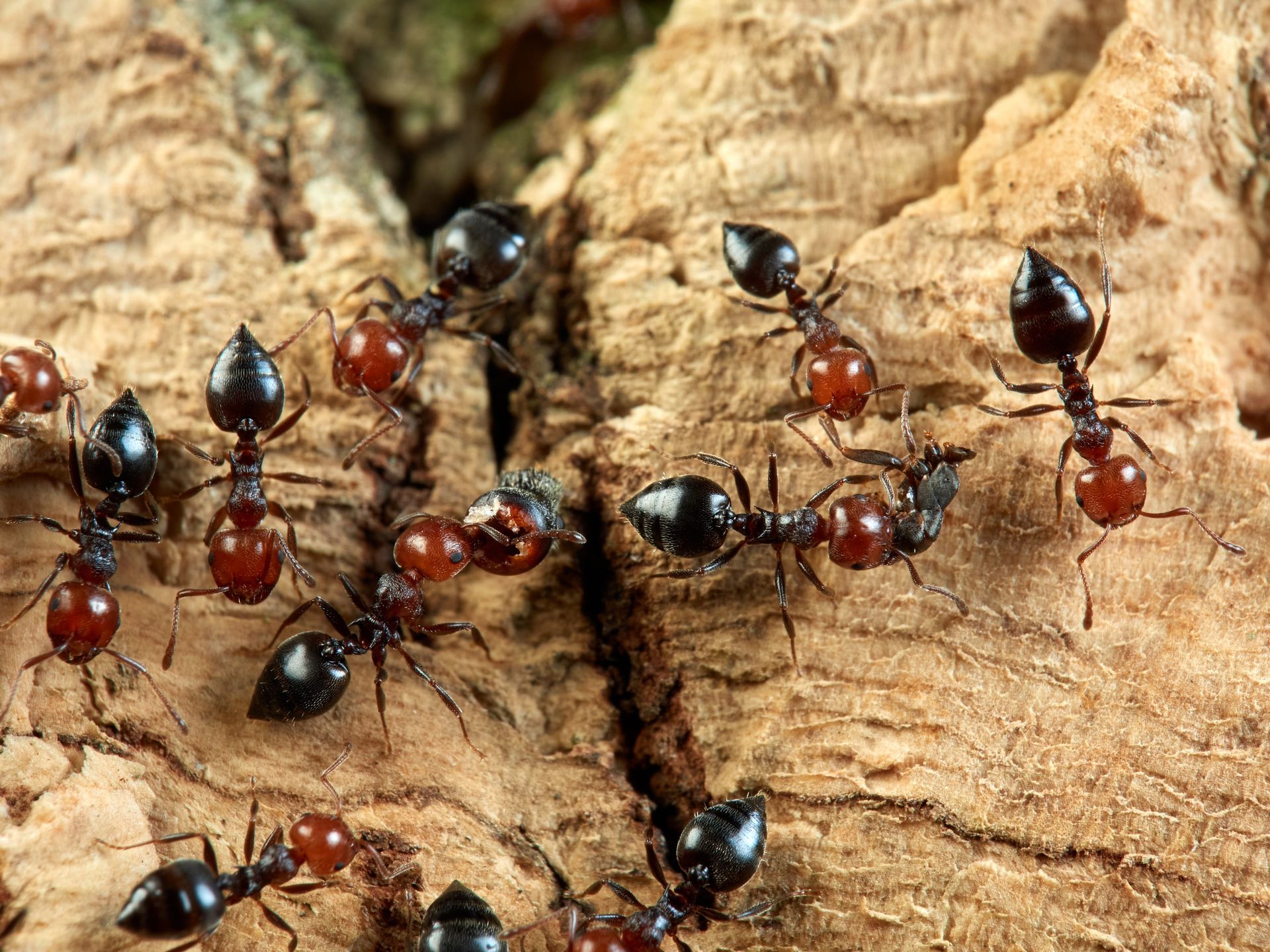
Physical Characteristics:
- Acrobat ants vary in size depending on the species, but they generally have a well-defined heart-shaped abdomen.
- Their coloration can range from light brown to black.
- Antennae typically have twelve segments, and the workers have a distinct two-segmented waist.
Behavior and Defensive Posture:
- The characteristic behavior of acrobat ants is their ability to raise their abdomen over their thorax and head, forming a “J” or “V” shape, when disturbed.
- This defensive posture is a unique feature among ants and gives them their common name.
Diet
- Acrobat ants are omnivores and have a diverse diet.
- They feed on a variety of food sources, including honeydew produced by aphids and scale insects, small insects, nectar, and other plant exudates.
Nesting Habits:
- Acrobat ants nest in a variety of locations, including dead wood, logs, tree cavities, and even in the soil.
- Some species may also nest in structures, especially if there is decaying wood.
Feeding on Honeydew:
- Like many other ant species, acrobat ants engage in mutualistic relationships with honeydew-producing insects. They “farm” aphids or scale insects for their sweet honeydew excretions.
Indoor Presence:
- Some species of acrobat ants can become household pests, especially if they nest in or around structures.
- They may enter homes in search of food or nesting sites, and their presence may require pest control measures.
Impact on Plants:
- While acrobat ants are not generally considered major plant pests, they can impact plants indirectly by protecting honeydew-producing insects like aphids, leading to the production of sticky honeydew on leaves.
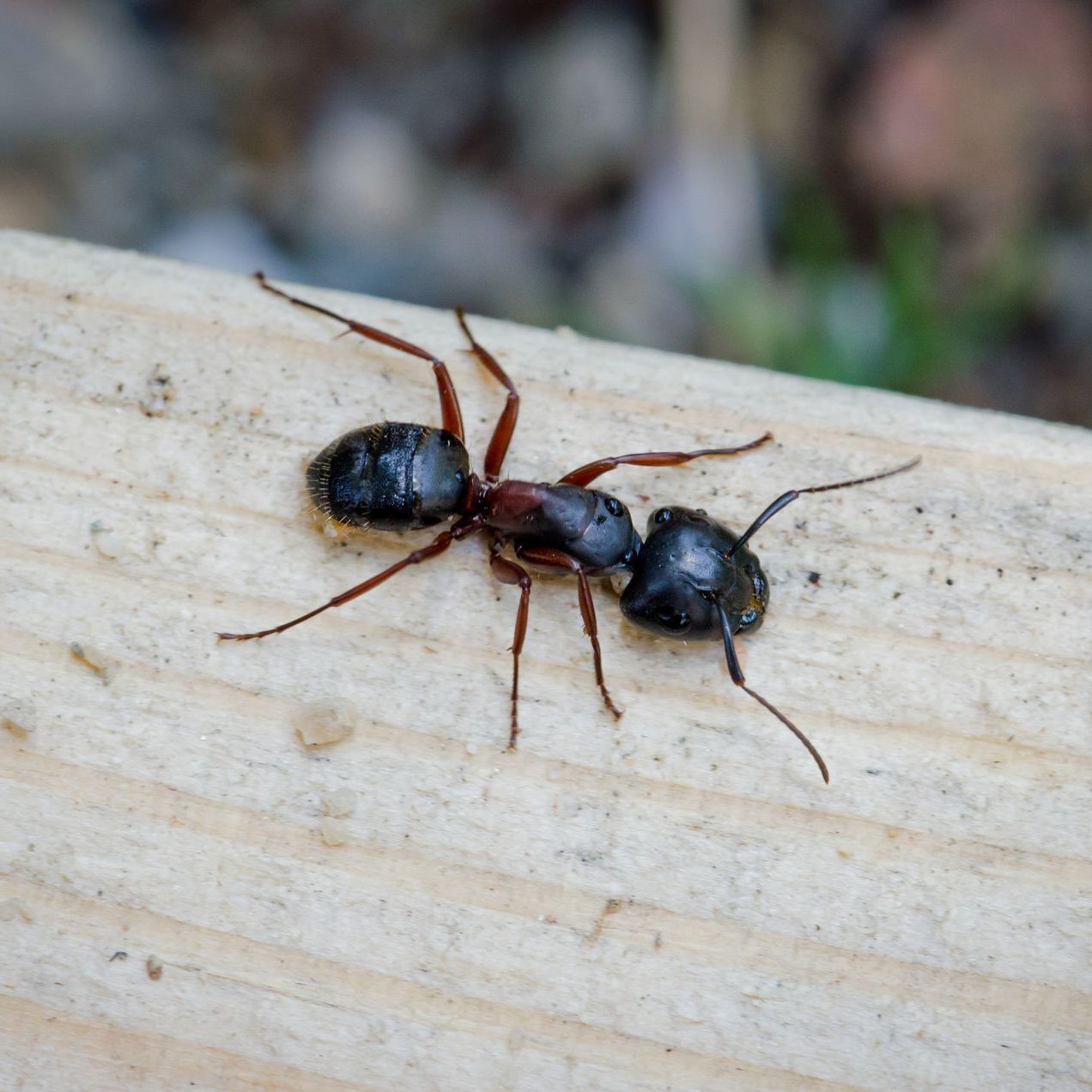
Physical Characteristics:
- Carpenter ants vary in size but are generally larger than many other ant species.
- They come in different colors, including black, red, brown, or a combination of these.
- They have a single, constricted segment (node) between the thorax and abdomen, distinguishing them from termites.
Colony Structure:
- Carpenter ant colonies are typically large, containing worker ants, a queen, and, in some cases, satellite colonies with additional queens.
- Worker ants vary in size, with major workers being larger than minor workers.
Nesting Behavior:
- Carpenter ants excavate galleries in wood to create their nests.
- They prefer damp or decaying wood, but they can also nest in sound, dry wood.
- Nests can be found in various locations, including trees, logs, fence posts, and structures.
Diet:
- Carpenter ants are omnivores and feed on a variety of food sources.
- Their diet includes insects, honeydew produced by aphids or scale insects, plant juices, and other small organisms.
Foraging Behavior:
- Carpenter ants forage for food, traveling relatively long distances from their nests.
- They are most active during the night, although they can be seen foraging during the day as well.
Damage to Structures:
- While carpenter ants do not eat wood, their nest-building activities can cause structural damage over time.
- Infestations are often identified by the presence of wood shavings (frass) near nest sites.
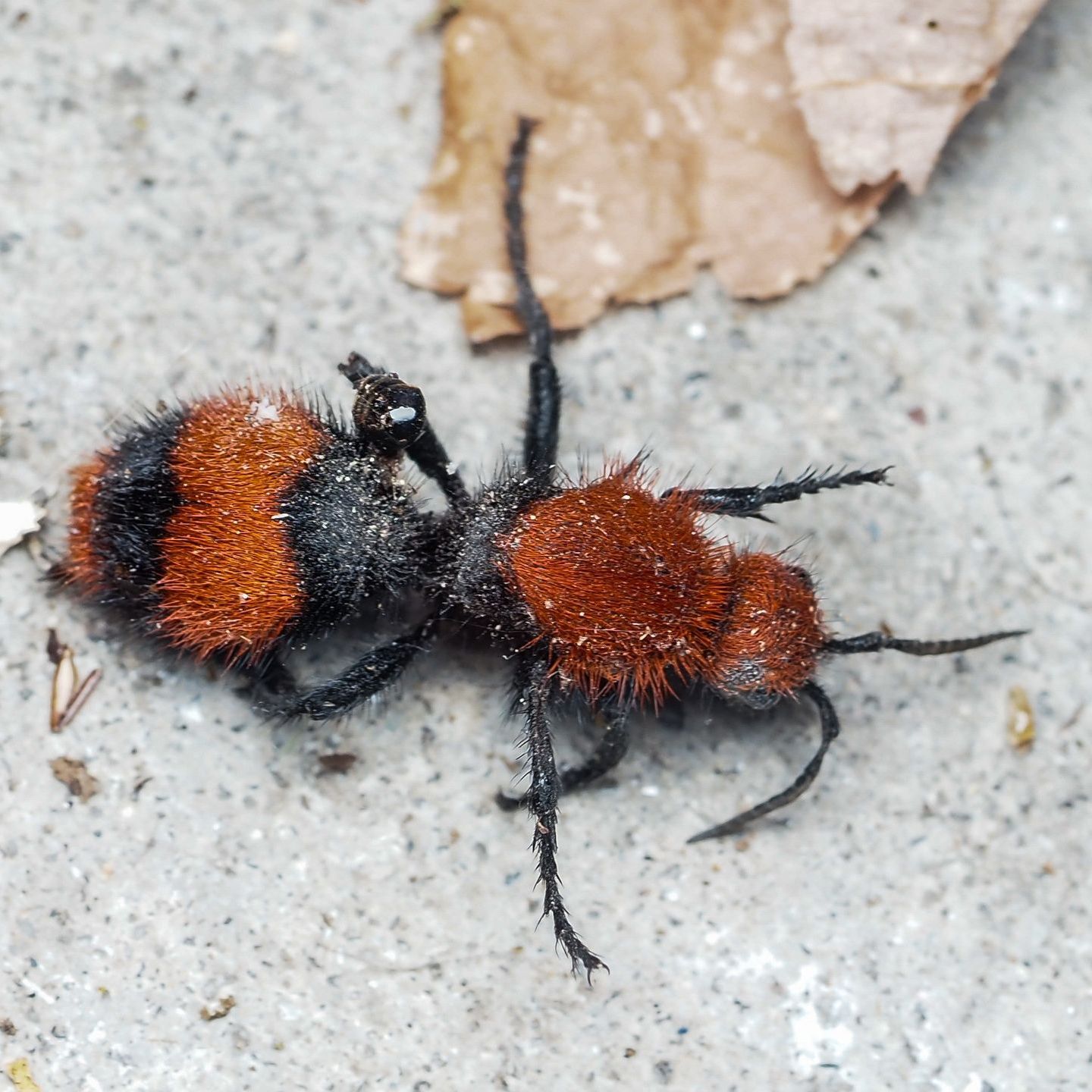
Appearance:
- Velvet ants are often brightly colored, with red and black being common hues.
- The females are wingless and resemble large, hairy ants. Males, on the other hand, are winged.
- The dense hair on their bodies can be short or long, and it serves as protection against predators.
Distribution:
- Velvet ants are found in various parts of the world, and different species inhabit different regions.
- They are commonly found in North and South America.
Life Cycle:
- Velvet ants go through complete metamorphosis, consisting of egg, larva, pupa, and adult stages.
- Females lay eggs in the nests of other solitary bees or wasps.
- The larvae are parasitoids, feeding on the larvae of the host species.
Stinger:
- Female velvet ants are known for their potent stingers, which can deliver a painful sting.
- The sting is reported to be one of the most painful insect stings experienced by humans.
Behavior:
- Velvet ants are solitary insects, and their behavior can vary between species.
- They are often seen running on the ground, searching for the nests of their host species.
Diet:
- Adult velvet ants feed on nectar from flowers.
- Larvae are parasitoids, feeding on the developing larvae of other solitary bees or wasps.
Habitat:
- Velvet ants are often found in open, sandy areas and are known to visit flowers to feed on nectar.
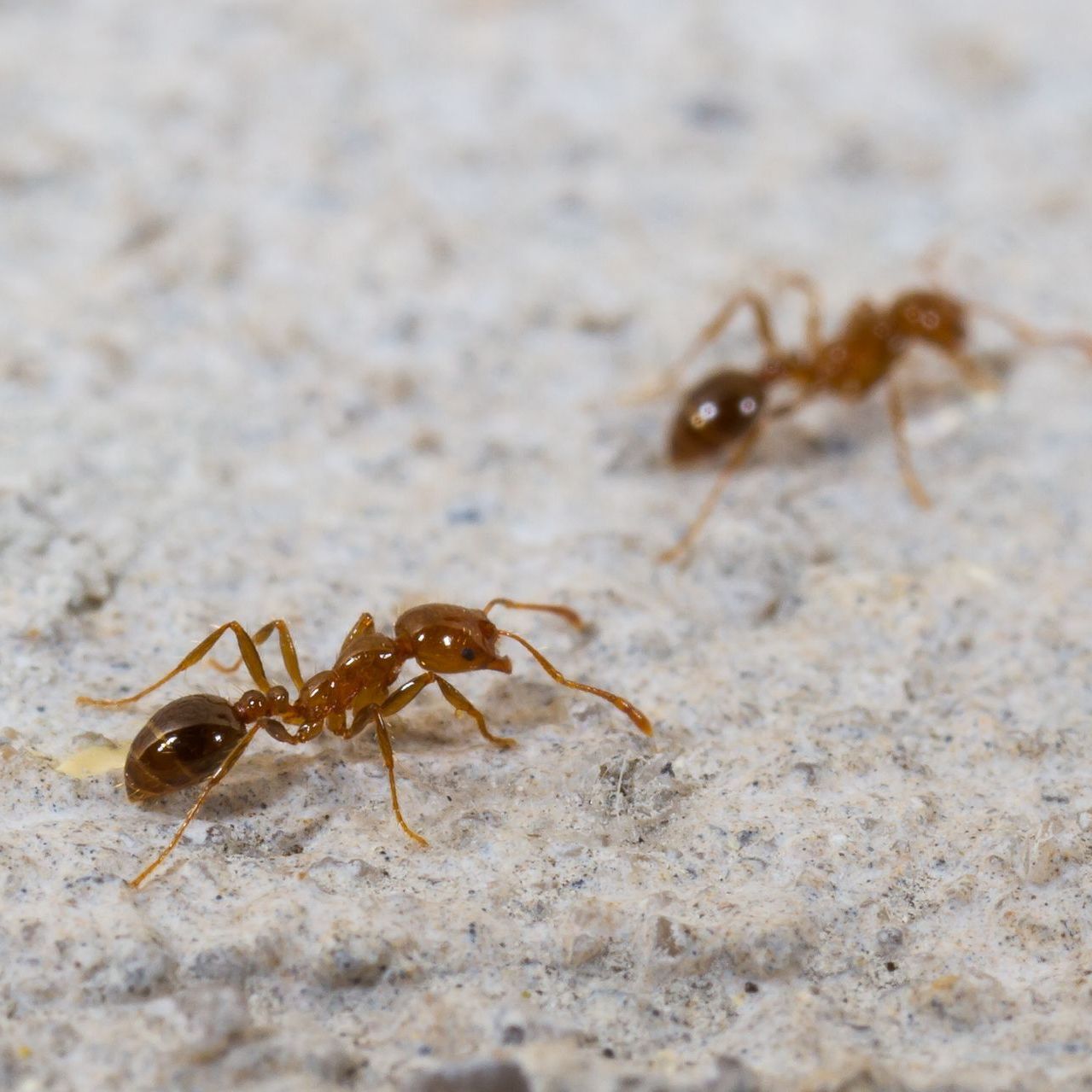
Appearance:
- Red imported fire ants vary in size, with workers typically ranging from 1/8 to 1/4 inch in length.
- They are reddish-brown to dark brown in color, and their bodies have a two-segmented appearance with a distinct head and thorax.
Colonial Structure:
- Red imported fire ants live in large colonies that can contain hundreds of thousands to millions of individuals.
- Colonies are headed by a queen, and there are worker ants, male ants, and sometimes winged reproductive ants.
Nesting Behavior:
- Fire ant colonies construct nests in soil, creating large mounds that can be up to several feet in diameter.
- Nests are commonly found in open areas such as lawns, fields, and parks.
Stinging Behavior:
- Red imported fire ants are known for their aggressive nature and painful sting.
- When disturbed, worker ants can swarm and sting intruders repeatedly.
- The venom from their stings can cause a burning sensation, and some individuals may experience severe allergic reactions.
Diet:
- Fire ants are omnivores and have a diverse diet that includes insects, small animals, seeds, and plant matter.
- They are known for their scavenging behavior and can quickly consume dead animals.
Human Interaction:
- Fire ant stings can cause allergic reactions in some individuals.
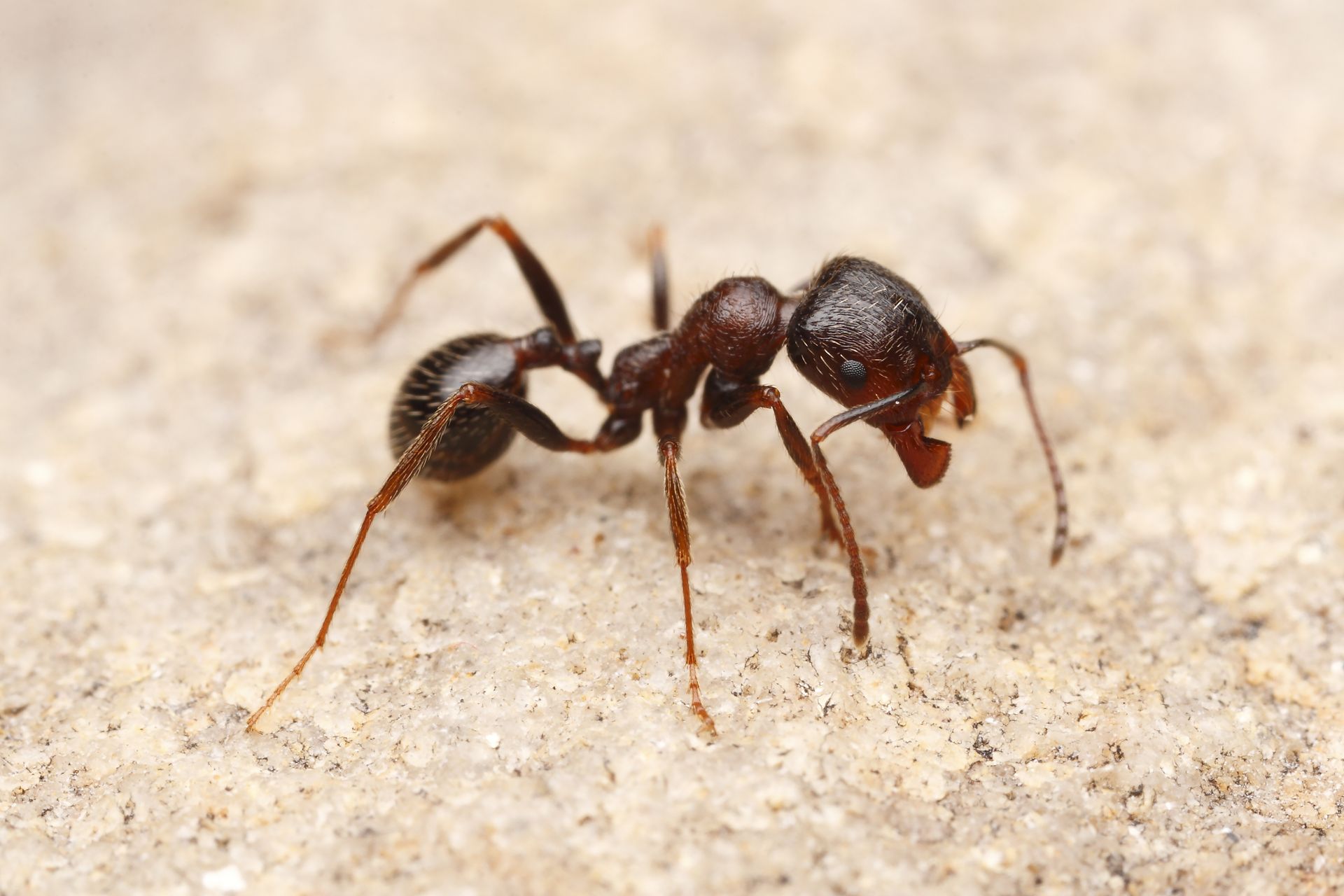
Physical Characteristics:
- Harvester ants are generally large ants, with workers ranging from about
1/4 to 1/2 inch in length. - They are typically reddish-brown to dark brown in color, and their
bodies are covered with fine hairs.
Diet:
- As the name suggests, harvester ants primarily feed on seeds.
- They forage for seeds on the ground, and their diet may also include
other plant material, nectar, and small insects.
Foraging Behavior:
- Harvester ants are known for their efficient foraging strategies.
- Workers travel considerable distances from their nests to collect seeds,
carrying them back to the nest in specialized pouches on their hind
legs.
Nesting Habits:
- Harvester ants build nests in the soil, and the size and structure of
the nests can vary among species. - Nests may consist of multiple entrances, tunnels, and chambers.
Colony Structure:
- Harvester ant colonies are organized with a single reproductive queen,
male ants, and sterile female workers. - The number of workers in a colony can vary, and large colonies may have
thousands of individuals.
Defensive Behavior:
- Harvester ants can be aggressive and defend their nests from potential
threats. - Some species have powerful stings, and their venom can cause pain and
discomfort.
Human Interaction:
- Harvester ants can become pests in agricultural areas, as they may
damage crops by consuming seeds or interfere with seedling establishment. - Some species have powerful stings that can be a concern for humans and
animals, especially those with allergies.

Physical Characteristics:
- Little black ants are small, ranging in size from 1/16 to 1/8 inch in
length. - They are typically black or dark brown in color.
- The workers have a distinct appearance with a single node between the
thorax and abdomen.
Colony Structure:
- Little black ants live in colonies, which can vary in size but often
consist of thousands of individuals. - The colonies have a social structure with workers, queens, and sometimes
males.
Diet:
- Little black ants are omnivores, with a diet that includes honeydew
produced by aphids, nectar, small insects, and a variety of food scraps. - They are known to invade homes in search of food.
Foraging Behavior:
- Little black ants are opportunistic foragers, and they establish
foraging trails to food sources. - They are attracted to sugary substances and protein-rich foods.
Nesting Habits:
- Little black ants nest in a variety of locations, including soil,
rotting wood, under stones, and within wall voids in buildings. - Nests are often inconspicuous and may not have a visible entrance.
Indoor Presence:
- Little black ants are known to invade homes in search of food,
especially sweet or sugary substances. - They may enter through small cracks, gaps, or openings in
structures.
Human Interaction:
- While little black ants are generally not aggressive and do not pose
significant threats to humans, they can become household pests when they
invade homes in search of food.
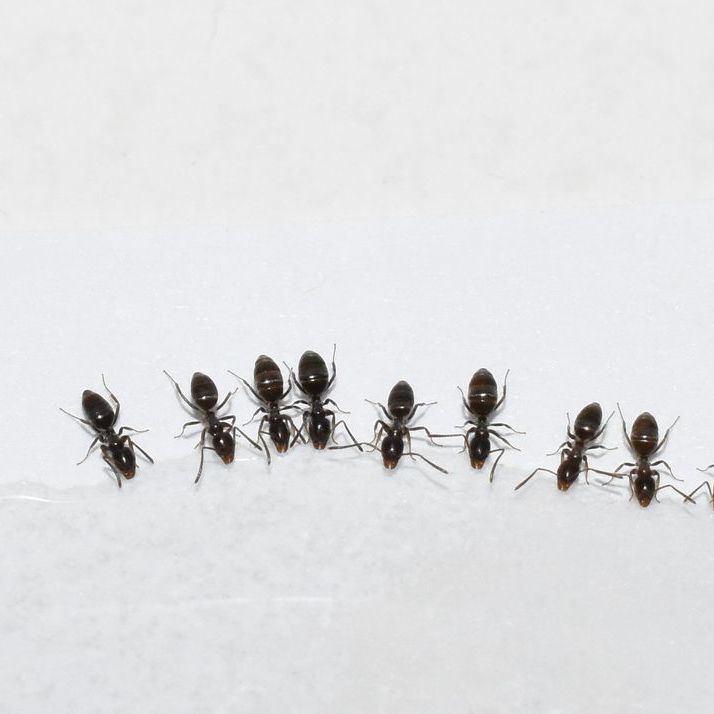
Physical Characteristics:
- Odorous house ants are relatively small, with workers typically ranging
from 1/16 to 1/8 inch in length. - They have a dark brown to black color and a segmented body with a single
node between the thorax and abdomen.
Colony Structure:
- Odorous house ants live in colonies, which can contain thousands of
individuals. - Colonies have multiple queens, and worker ants are responsible for
foraging, caring for the brood, and tending to the colony.
Diet:
- These ants have a diverse diet that includes honeydew produced by
aphids, nectar, small insects, and a variety of food scraps. - They are attracted to sweet substances but also forage for protein-rich
foods.
Foraging Behavior:
- Odorous house ants form foraging trails to food sources, and they can be
commonly found inside homes searching for food. - They are known to be attracted to sugary substances, including spills,
crumbs, and food residues.
Nesting Habits:
- Odorous house ants build nests in a variety of locations, including
soil, mulch, logs, and within structures. - Nests are often found in wall voids, beneath floors, or in other
concealed areas.
Odor Defense Mechanism:
- When crushed or threatened, odorous house ants release a distinct odor,
which is where they get their name. - The odor is thought to serve as a defense mechanism against
predators.
Indoor Presence:
- Odorous house ants are common household pests, and their presence is
often noted in kitchens and areas where food is stored. - They may enter homes through cracks, gaps, or openings in
structures.
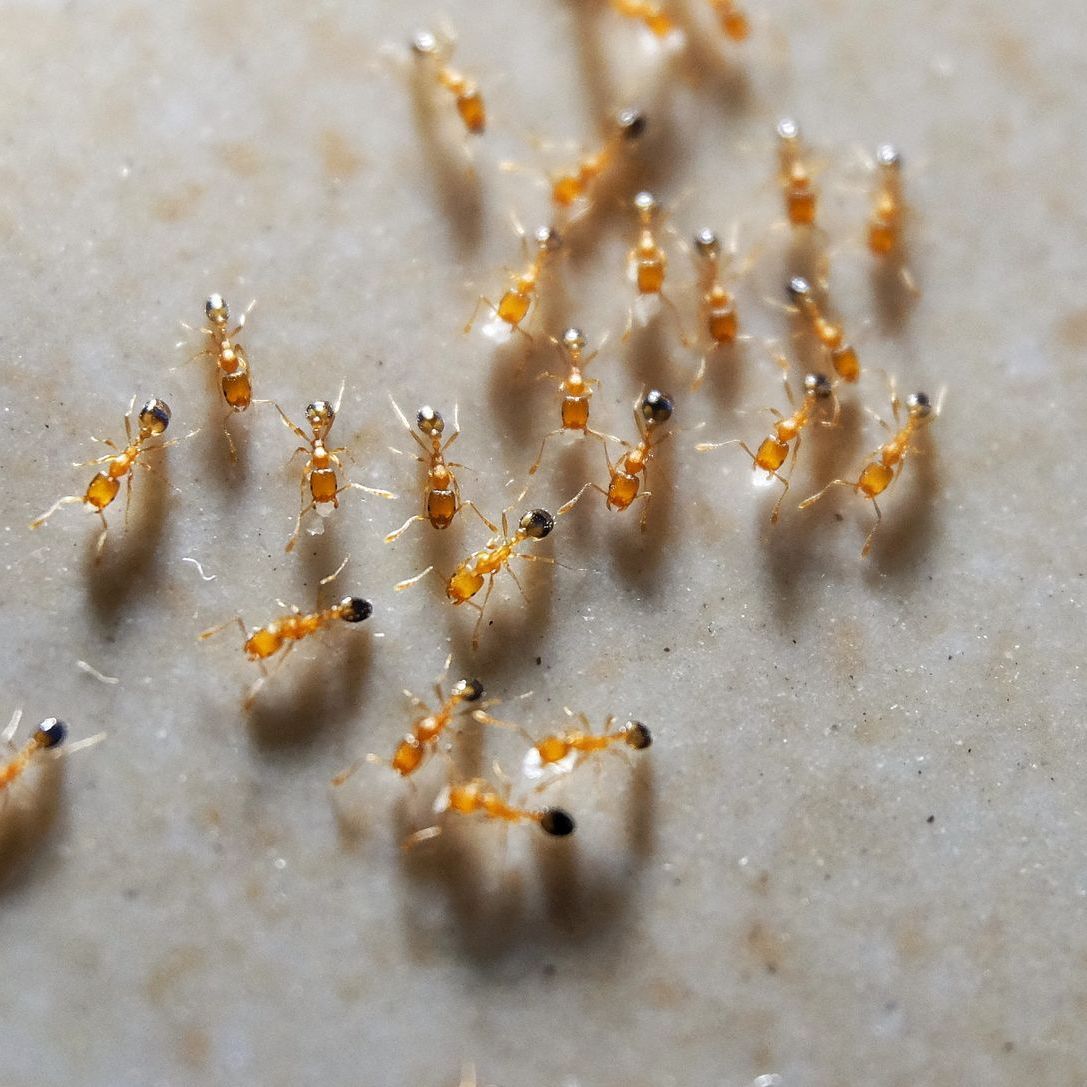
Physical Characteristics:
- Pharaoh ants are small, measuring about 1/16 inch (1.5 mm) in
length. - They are light yellow to reddish-brown in color and have distinctive
dark markings on their abdomen. - The workers are monomorphic, meaning they are of the same size within a
colony.
Colony Structure:
- Pharaoh ant colonies are large and can contain thousands to several
hundred thousand individuals. - Colonies are polygynous, meaning they have multiple queens, and are
known for splitting into smaller colonies through a process called
budding.
Nesting Habits:
- Pharaoh ants nest in warm, humid locations.
- Common nesting sites include wall voids, behind baseboards, in
electrical outlets, and within appliances. - They are also known to nest in food storage areas.
Diet:
- Pharaoh ants have a diverse diet, feeding on sugars, proteins, oils, and
dead insects. - They are attracted to a wide range of food sources and have a preference
for sweet substances.
Foraging Behavior:
- Pharaoh ants are highly adaptable foragers, and they establish foraging
trails to food sources. - They are known to exploit resources in kitchens, food storage areas, and
even medical facilities.
Indoor Presence:
- Pharaoh ants are common indoor pests and are frequently found in
commercial establishments, hospitals, and residential homes. - They can exploit the smallest cracks and crevices to gain access to
buildings.
Challenges in Control:
- Pharaoh ants are notoriously difficult to control due to their rapid
reproduction, ability to create multiple colonies, and resistance to many
common insecticides. - Improper control methods, such as using repellent insecticides, can lead
to colony budding and worsen infestations.
Health Concerns:
- Pharaoh ants are potential vectors of bacteria, including those
associated with hospitals. - Their presence in medical facilities poses a significant concern due to
the potential for contamination.
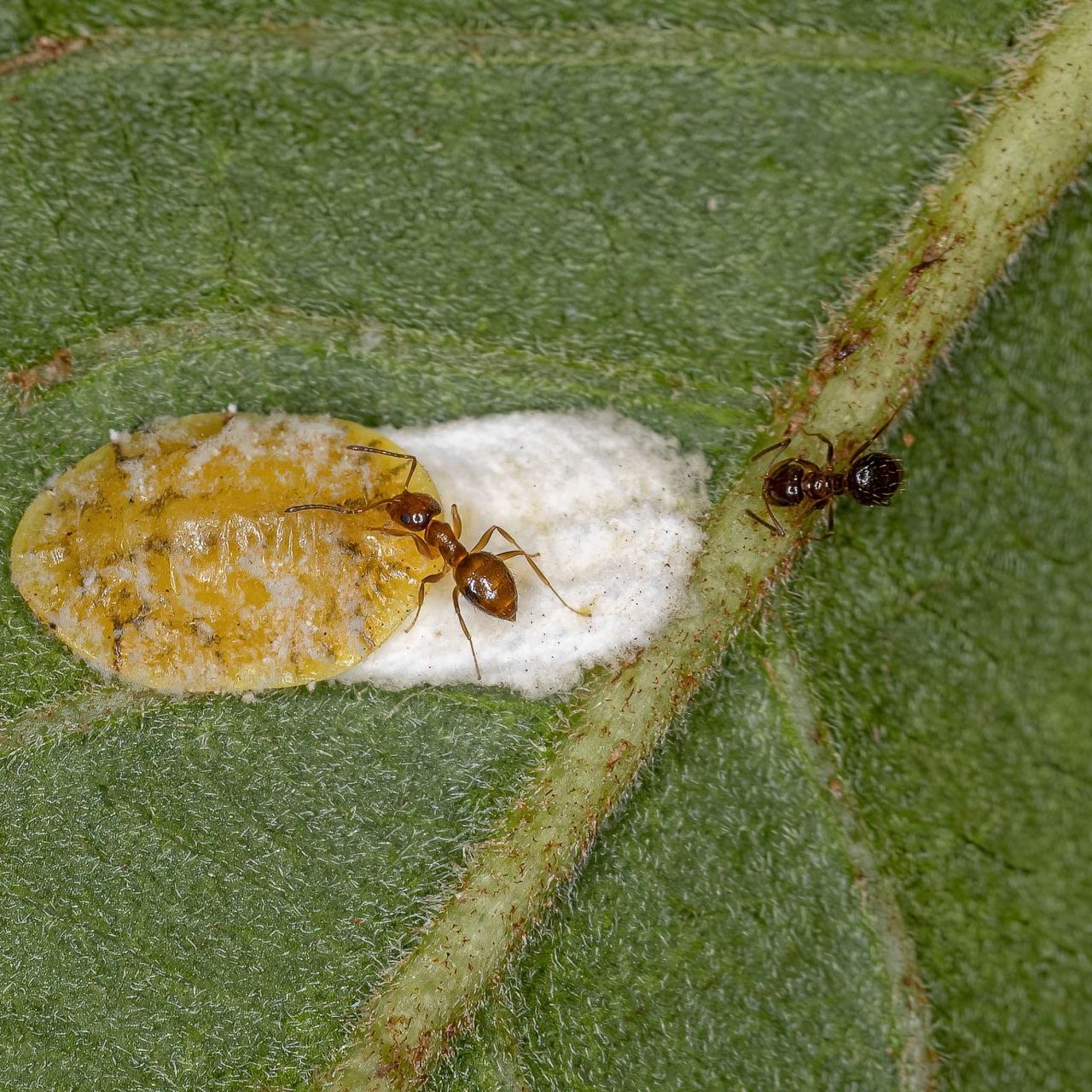
Physical Characteristics:
- Rover ants are generally small ants, with workers measuring around 1/16
to 1/8 inch (1.5 to 3.2 mm) in length. - They can vary in color, with some species being light brown,
reddish-brown, or black.
Colony Structure:
- Rover ants typically form small to moderate-sized colonies.
- Colonies may contain multiple queens, and they can nest in various
locations, including soil, leaf litter, and under rocks.
Diet:
- Rover ants have a diverse diet, feeding on honeydew produced by aphids
and scale insects, as well as other sugary substances. - They may also forage for small insects and scavenged food.
Foraging Behavior:
- Rover ants are known for their active and erratic foraging
behavior. - They explore their surroundings extensively in search of food
resources.
Nesting Habits:
- Rover ants nest in a variety of locations, including the soil, leaf
litter, and in the cavities of plants. - Nests can be inconspicuous, and they may relocate their colonies
frequently.
Indoor Presence:
- Some rover ant species may enter homes in search of food, especially if
there are accessible food sources. - They are generally not considered major household pests.
Outdoor Habitat:
- Rover ants are commonly found in outdoor environments, including
gardens, lawns, and natural areas. - They contribute to ecosystem processes, such as seed dispersal and
nutrient cycling.