
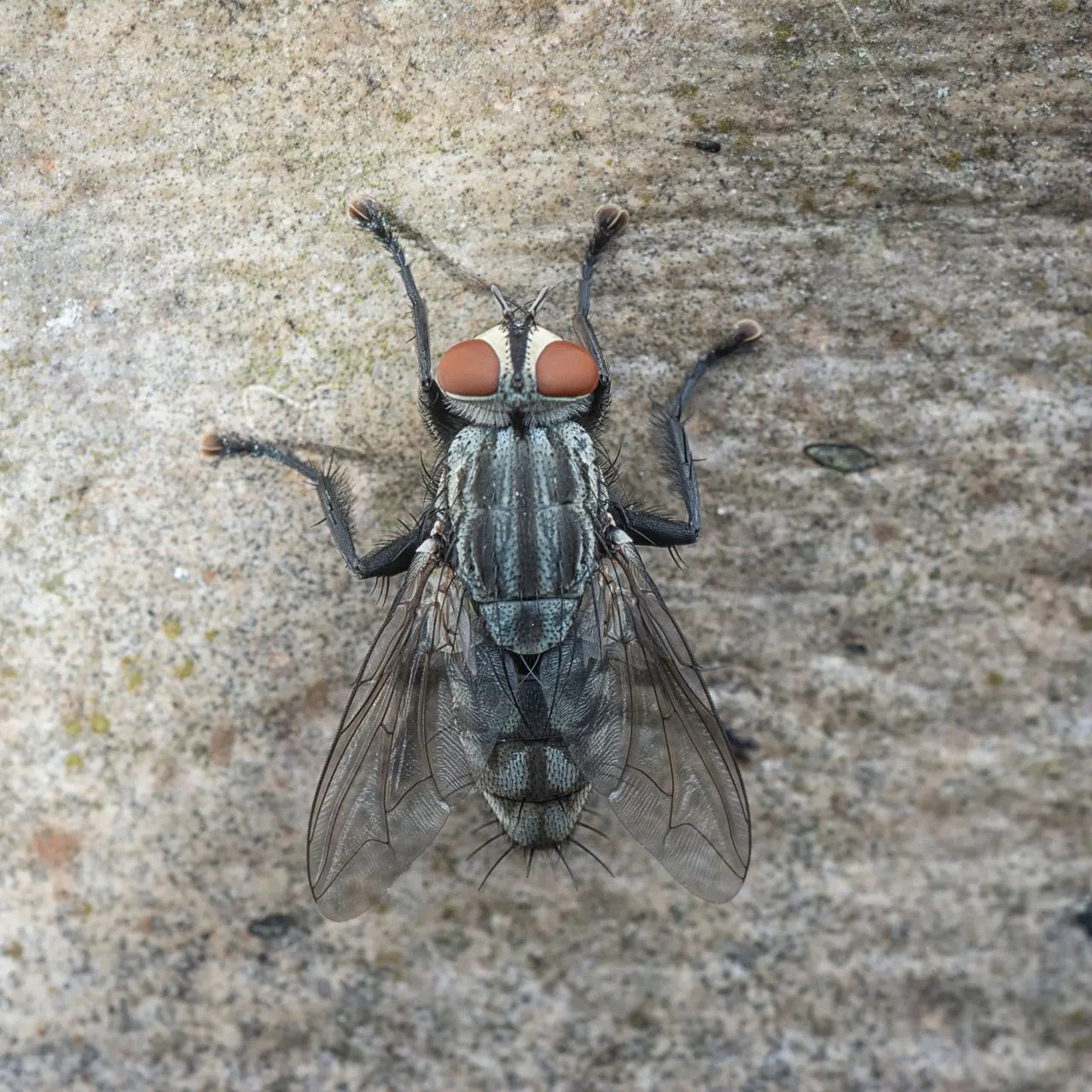
Flies in North Texas
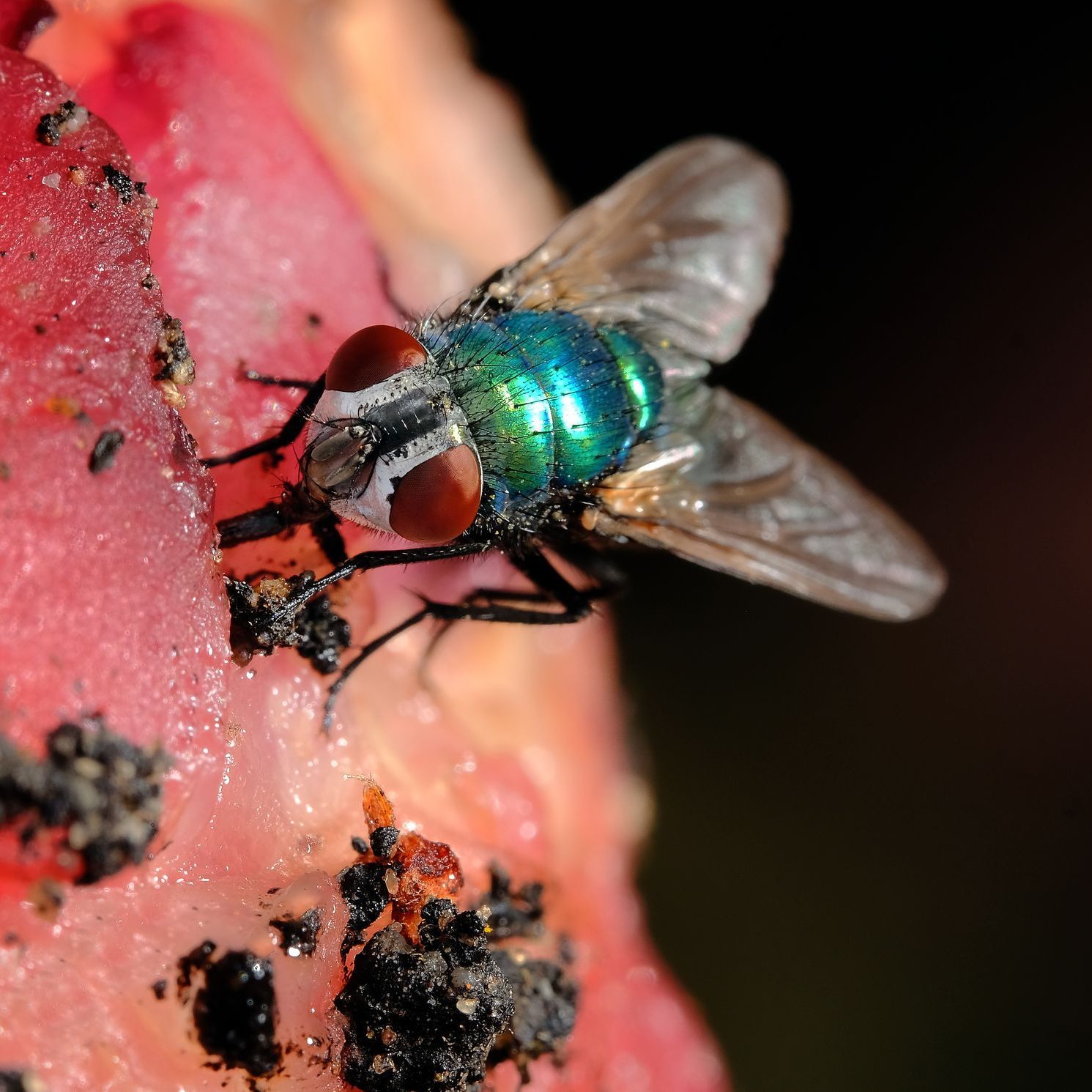
Appearance:
- Metallic, iridescent coloring (green, blue, copper)
- Robust, hairy bodies
- Transparent or distinctly marked wings
- Larvae are legless, cylindrical with tapered heads
Habitat:
- Urban areas, forests, agricultural landscapes
- Attracted to decaying organic matter, carrion, feces
Diet:
- Adults consume nectar and pollen
- Larvae scavenge decomposing organic material
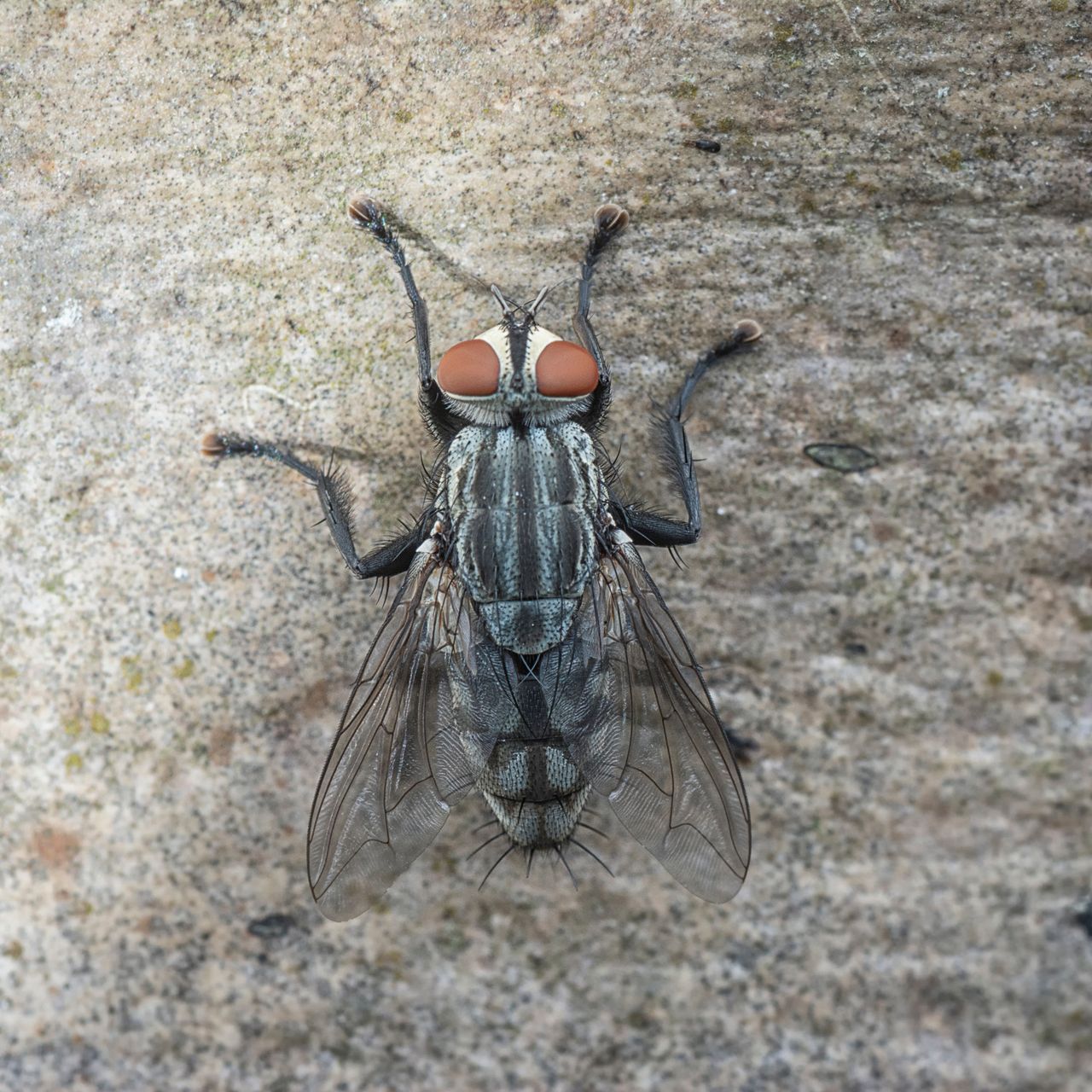
Appearance:
- 8-10mm length, slightly larger than houseflies
- Dark-gray to black with golden-yellow hairs
- Wings overlap forming a dark stripe at rest
Habitat:
- North America, Europe, temperate regions
- Rural, suburban, and urban environments
- Feed on flower nectar during warm months
Behavior:
- Cluster flies get their name from their habit of gathering in large numbers in fall/winter
- Seek shelter indoors; sluggish in cold temperatures
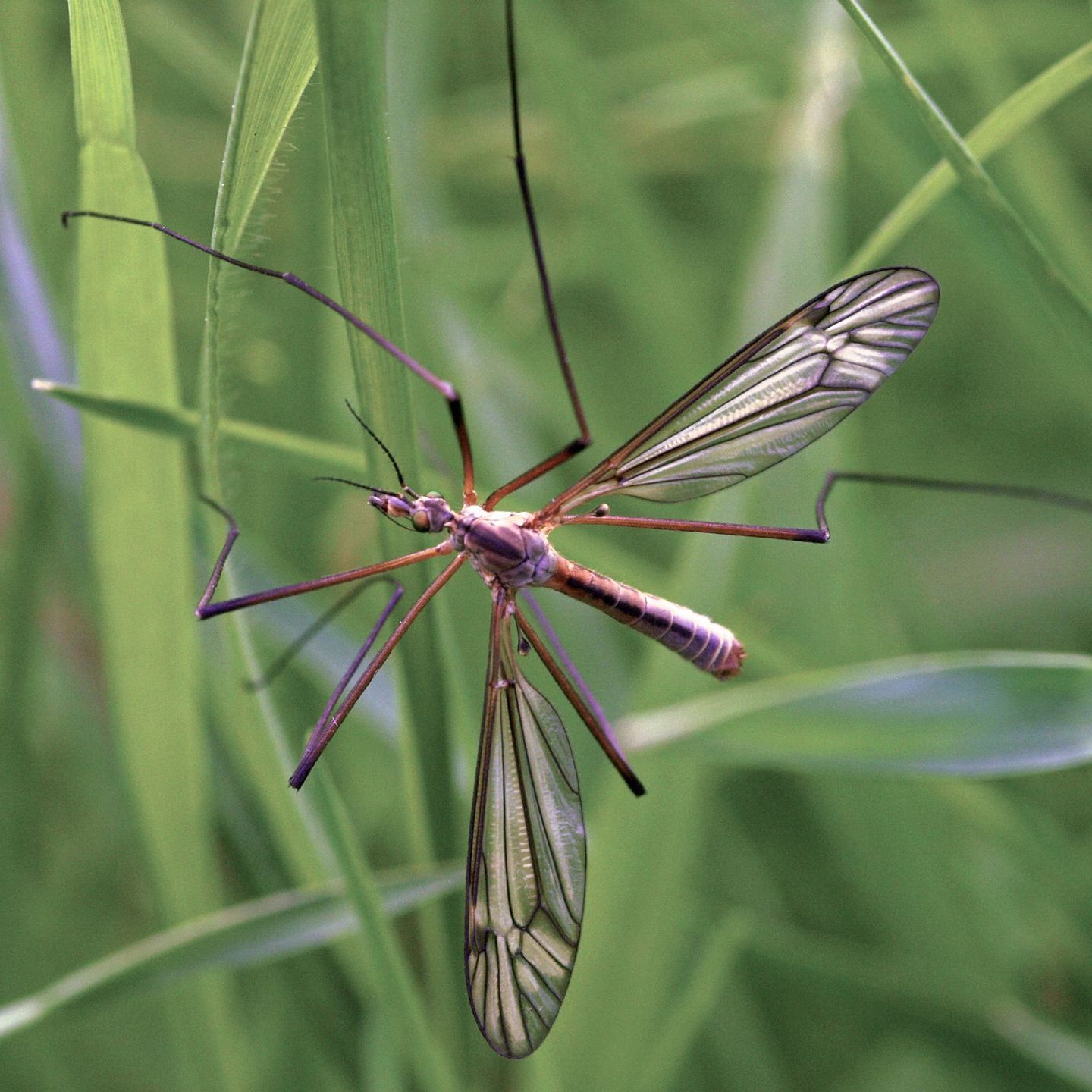
Appearance:
- Long, slender bodies resembling oversized mosquitoes
- Single pair of wings, 1-6 inch wingspan
- No biting proboscis (unlike mosquitoes)
Habitat:
- Gardens, meadows, forests, wetlands
- Larvae in moist soil, standing water, decaying vegetation
Diet:
- Adults don’t feed; focused on reproduction
- Larvae (leatherjackets) consume roots and decaying matter
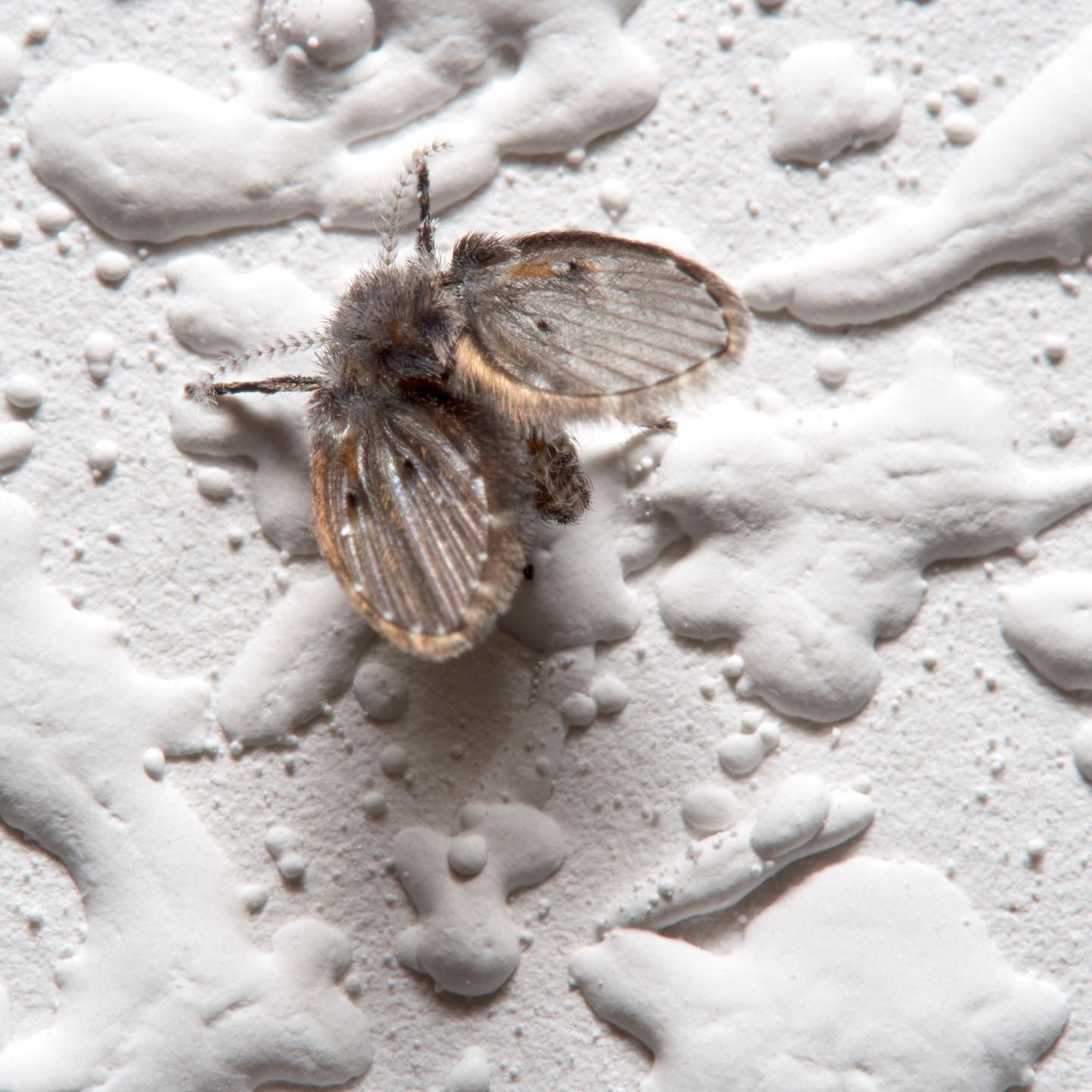
Appearance:
- 1/16-1/8 inch length
- Fuzzy or moth-like appearance, with a pair of large wings covered in scales
- Light gray/tan with mottled patterns
Habitat:
- Drains, sink traps, sewage systems
- Damp, dark bathroom/kitchen areas
Diet:
- Larvae feed on organic matter, fungi, bacteria
- Adults don’t feed
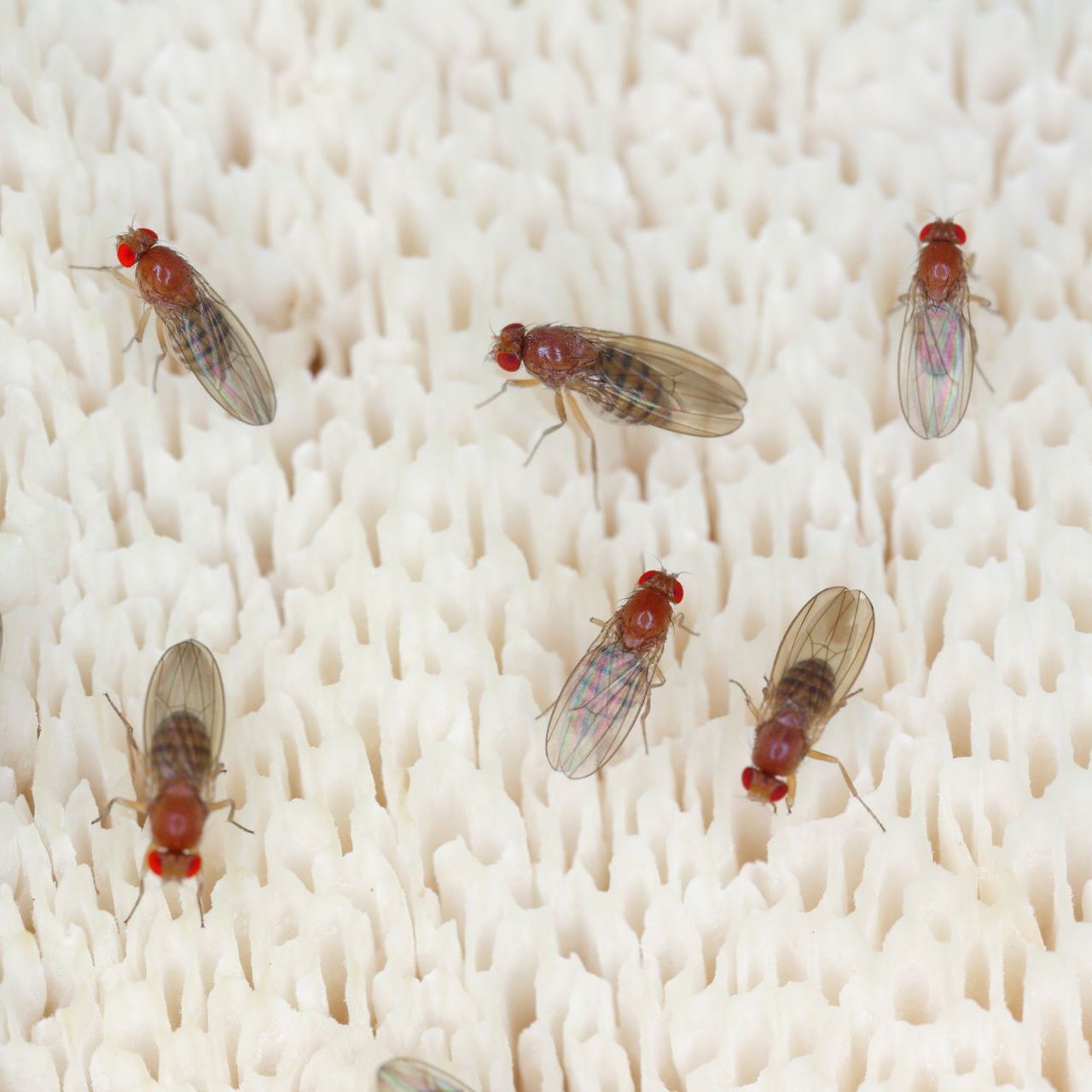
Appearance:
- 1/8 inch length
- Red eyes, tan thorax, black abdomen
- Clear wings with dark bands
Habitat:
- Worldwide; homes, stores, markets
- Overripe/decaying fruits and vegetables
Diet:
- Ripened or fermenting fruits and vegetables
- Sugary substances (juices, soda, alcohol)
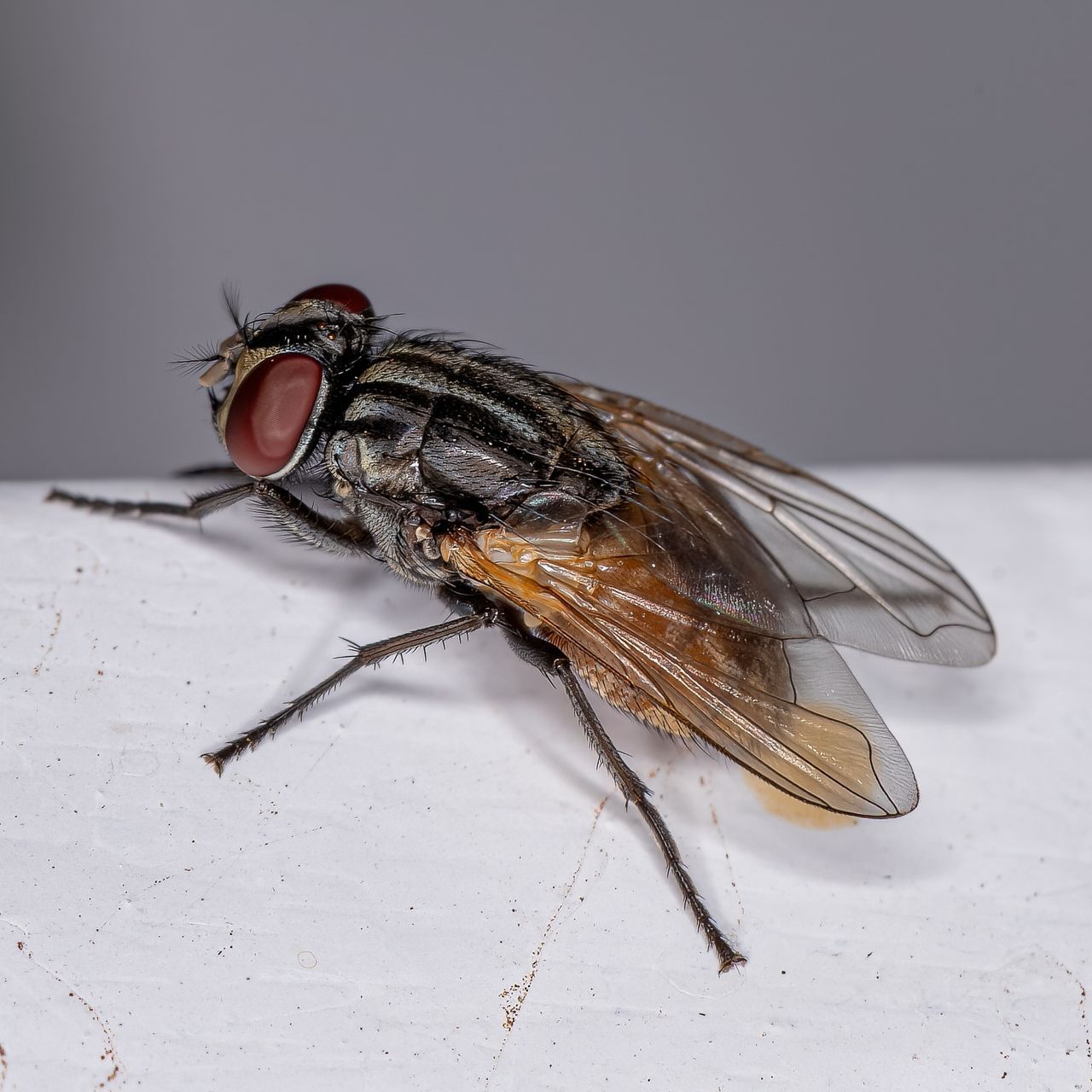
Appearance:
- 1/4-3/8 inch length
- Gray thorax with four dark stripes, dull grayish abdomen
- Large, red eyes
Habitat:
- Homes, restaurants, farms, garbage dumps
- Attracted to decaying matter and waste
Diet:
- Scavenge food scraps, garbage, feces, plant matter
- Regurgitate digestive juices onto solid food to liquefy it