
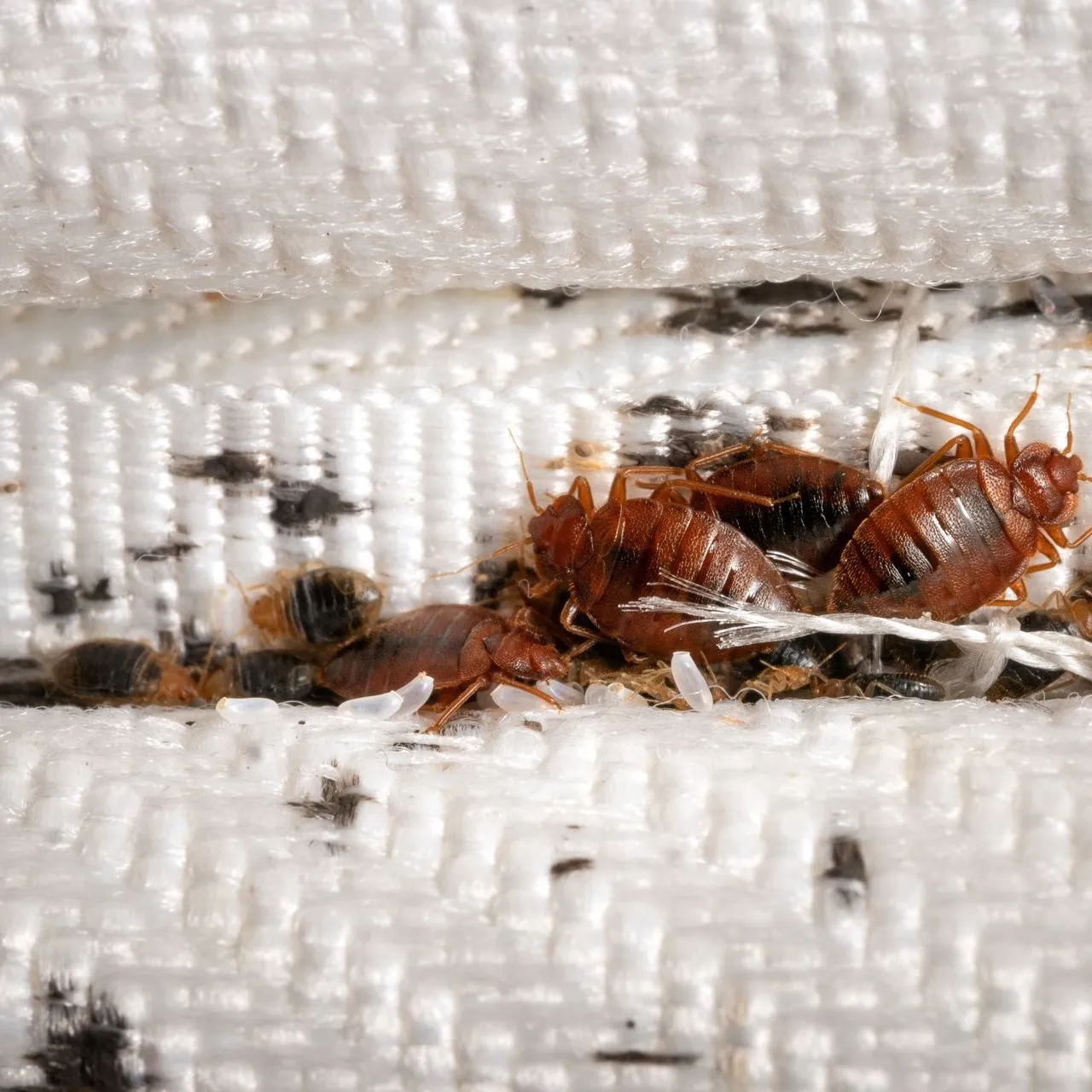
Physical Characteristics:
- Adult bed bugs are about the size of an apple seed, flat, and oval-shaped.
- They are wingless, and their bodies swell and turn reddish-brown after feeding on blood.
- Immature bed bugs (nymphs) resemble adults but are smaller and lighter in color.
Feeding Behavior
- Bed bugs are obligate blood feeders, and their primary food source is the blood of humans.
- They are nocturnal and usually feed during the night while the host is sleeping.
- Bed bugs use their specialized mouthparts to pierce the skin and withdraw blood.
Habitat
- Bed bugs prefer to live in and around areas where people sleep or spend extended periods, such as beds, mattresses, bed frames, and furniture.
- They can also be found in cracks, crevices, and hiding places near their feeding sources.
Life Cycle
- The bed bug life cycle includes egg, nymph, and adult stages.
- Female bed bugs lay eggs in hidden locations, and the nymphs go through several molts before reaching adulthood.
- Bed bugs require a blood meal to molt and develop to the next life stage.
Signs of Infestation
- Signs of a bed bug infestation include the presence of live bugs, shed exoskeletons, fecal stains (small dark spots on bedding or furniture), and a sweet, musty odor.
- Bed bug bites may appear as itchy, red welts on the skin.
Transmission
- Bed bugs are primarily transported by humans, as they can hitchhike on clothing, luggage, and personal belongings.
- Infestations are not necessarily associated with unclean or unsanitary conditions.
Health Concerns:
- While bed bugs are not known to transmit diseases, their bites can cause itching and discomfort.
- Excessive scratching of bites can lead to secondary infections.